
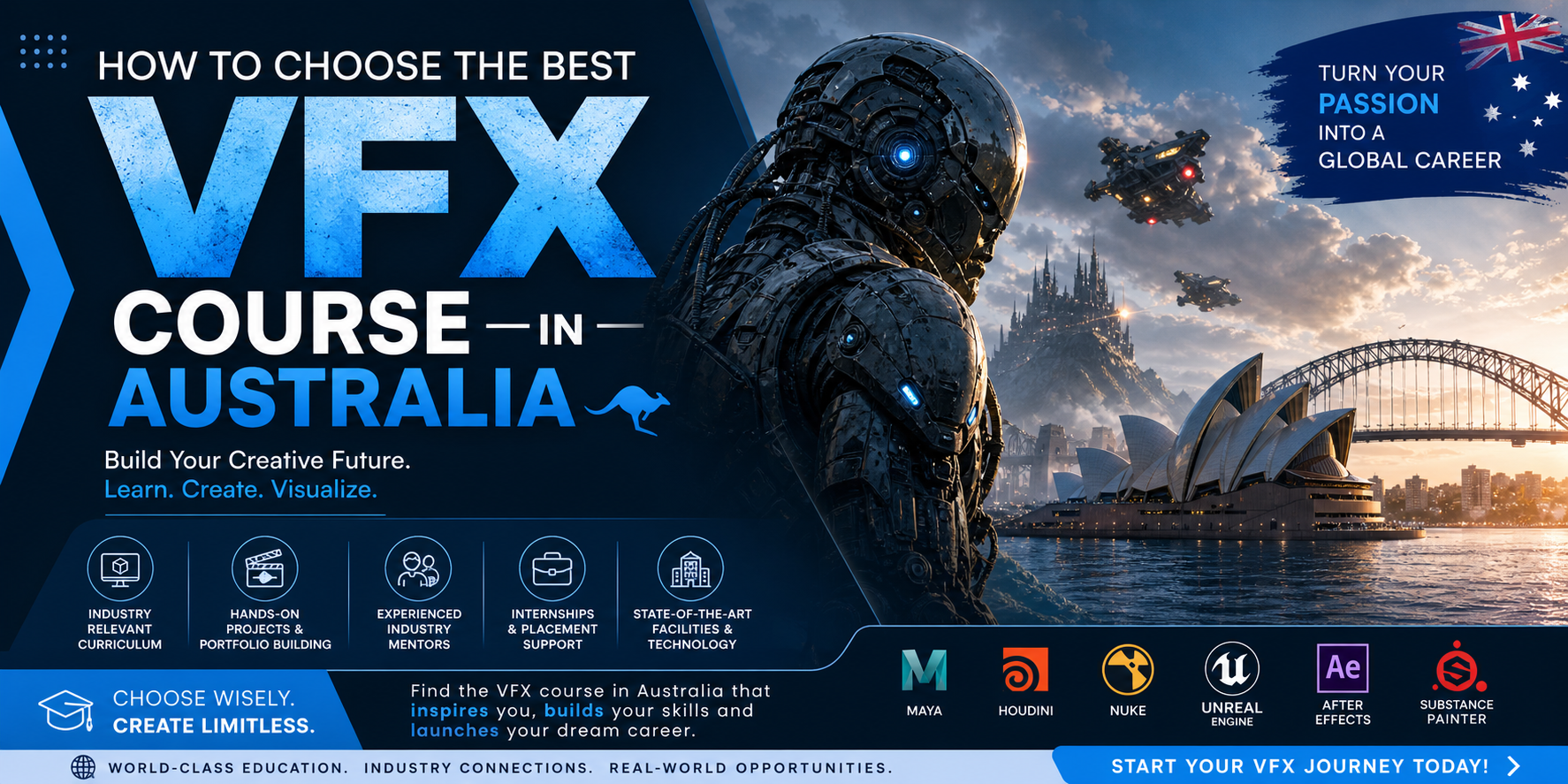
Your introduction needs the exact keyphrase “VFX course in Australia” in the opening paragraph so search engines immediately understand the topic.
Here’s an SEO-optimized replacement for your first paragraph:
Australia has become one of the fastest-growing destinations for creative technology education, making a VFX course in Australia an excellent choice for students who want to build a successful career in visual effects, animation, and digital production. With the increasing demand for skilled VFX artists in film, gaming, advertising, and virtual production, choosing the right course can shape your future in this competitive industry. However, with so many institutes and programs available, selecting the best VFX course in Australia requires careful research and a clear understanding of your career goals.
This places the keyphrase naturally in the first paragraph without awkward repetition, which ke
Understand Your Career Goals
Before enrolling in any VFX course in Australia, define what you want to become.
Visual effects is a broad industry with multiple career paths, including:
- Compositor
- 3D Modeler
- FX Artist
- Lighting Artist
- Texture Artist
- Matchmove Artist
- Roto Artist
- Virtual Production Artist
- Technical Director
Different courses focus on different specialisations.
For example, if your goal is to work in cinematic VFX for films, choose a course that focuses heavily on compositing, Houdini simulations, and pipeline workflows.
If you’re interested in gaming and real-time environments, look for programs that teach Unreal Engine, procedural environments, and interactive production tools.
The best VFX course in Australia is the one aligned with your long-term creative
Many students make the mistake of choosing a course based solely on branding or marketing.
Why Choosing the Right VFX Course in Australia Matters
Instead, evaluate the curriculum.
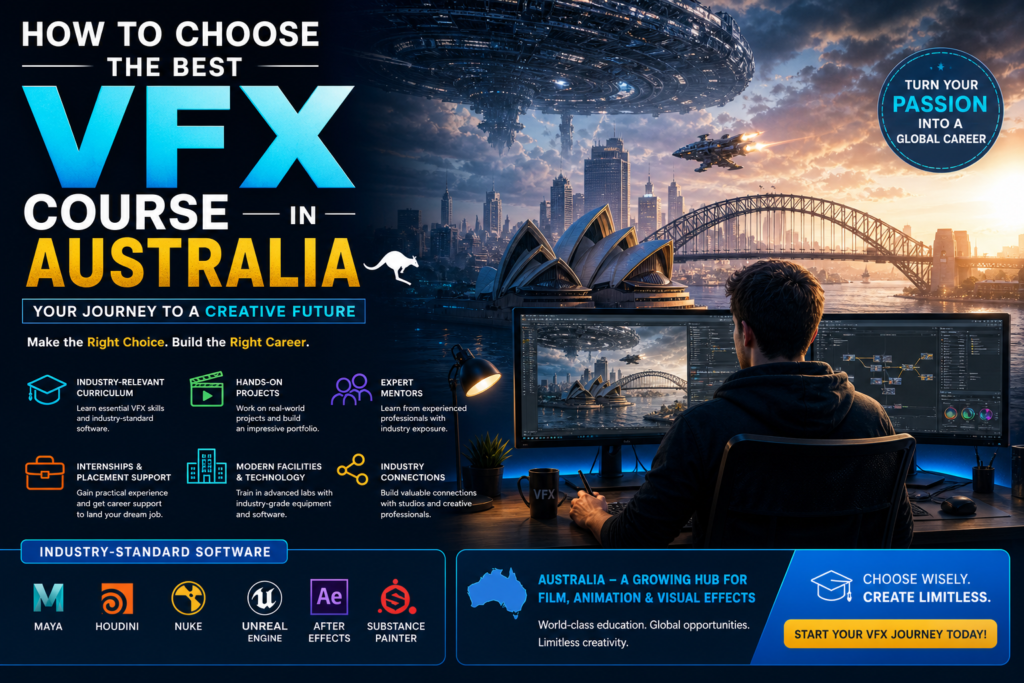
A high-quality VFX course in Australia should include training in:
Core VFX Software
- Autodesk Maya
- Houdini
- Nuke
- Blender
- Adobe After Effects
- Substance Painter
- Unreal Engine
Essential Skills
- Compositing
- 3D Modeling
- Texturing
- Lighting
- Rendering
- Motion Tracking
- Simulation Effects
- Rotoscoping
- Matte Painting
Institutions such as SAE University College specifically highlight virtual production, compositing, procedural graphics, and real-time engines in their VFX pathways.
If a course lacks industry-standard software training, it may not adequately prepare you for studio work.
3. Look for Industry-Relevant Projects
Theory is useful, but VFX is a practical field.
A strong VFX course in Australia should offer project-based learning where students create:
- Short VFX films
- Simulated destruction scenes
- CGI environments
- Character animation projects
- Green screen compositing assignments
Portfolio-building opportunities are crucial because employers often evaluate your showreel before your degree.
Programs like the Master of Animation and Visual Effects at UNSW Sydney emphasize hands-on studio projects and professional practice.
Always ask:
Will this course help me graduate with a strong showreel?
If the answer is unclear, keep looking.
4. How to Identify the Best VFX Course in Australia for Your Goals
Your mentors matter.
The best VFX course in Australia will have instructors with real studio experience in:
- Feature films
- TV post-production
- Commercial animation
- Virtual production
- Game cinematics
Faculty who have worked in active studios understand current workflows, software pipelines, and hiring expectations.
Courses taught by industry practitioners provide insights you won’t get from textbook-based teaching.
For instance, many Australian institutions now highlight direct mentorship from working professionals as a key advantage.
5. What to Look for in a VFX Course in Australia Curriculum
A great VFX course in Australia should help bridge the gap between education and employment.
Look for institutions offering:
- Internship opportunities
- Studio collaborations
- Industry networking events
- Portfolio reviews by professionals
- Career guidance
Some Australian VFX schools collaborate with studios and creative tech companies to provide students with real-world exposure.
These industry links can significantly improve your chances of landing your first job.
Remember:
A course is not just about learning software — it’s about entering the industry.
6. Compare Course Duration and Flexibility
Not every student has the same schedule or financial situation.
Australian VFX programs come in different formats:
Short Courses
Ideal for beginners exploring the field.
Example: Introductory VFX workshops from AFTRS.
Diplomas
Good for fast-tracked skill development.
Bachelor’s Degrees
Comprehensive training with broader creative development.
Postgraduate Programs
Ideal for professionals seeking specialisation.
For example:
- UNSW Sydney offers postgraduate pathways in animation and VFX.
- SAE University College offers diploma to bachelor progression options.
Choose a VFX course in Australia that matches your timeline and learning style.
7. Consider Facilities and Technology
VFX education requires advanced infrastructure.
The right course should provide access to:
- High-performance rendering systems
- Motion capture studios
- Green screen setups
- Virtual production environments
- Professional editing suites
Modern facilities replicate studio workflows and improve practical learning.
Programs focused on virtual production and advanced rendering technologies offer a competitive edge in today’s market.
8. Diploma and Degree Programs for Visual Effects in Australia
One of the smartest ways to evaluate a VFX course in Australia is by checking student experiences.
Look for:
- Graduate success stories
- Employment outcomes
- Portfolio quality
- Industry placements
Community discussions often emphasize that strong mentorship and structured feedback matter more than simply attending a prestigious institution.
A flashy website means little if graduates struggle to find work.
Final Thoughts
Choosing the best VFX course in Australia requires careful research, clear career planning, and a realistic understanding of what the industry demands.
The ideal program should offer:
✔ Industry-standard software training
✔ Practical projects
✔ Experienced mentors
✔ Strong portfolio development
✔ Career support
✔ Modern production facilities
Whether you choose a diploma, bachelor’s degree, or postgraduate pathway, remember this:
Your showreel will matter more than your certificate.
The right VFX course in Australia won’t just teach software — it will help you develop the technical expertise, artistic eye, and production mindset needed to succeed in one of the world’s most exciting creative industries.
Recommended Services
Website designhttps://smarthooda.com/cliq-cash-3/
Looking for the best VFX course in Australia? Learn how to choose the right visual effects program based on curriculum, software training, industry exposure, mentors, and career opportunities.
This keeps the keyphrase prominent, reads naturally, and stays within a good search-result length.